

When is the best time to explore a sale or merger of my healthcare Company?
You may also ask: What is driving all the M&A activities for privately held healthcare businesses through a global pandemic?
- Is it Availability of Capital?
- Is it Uncertainty of Rising Taxes?
- Is it the possibility of Higher Interest Rates?
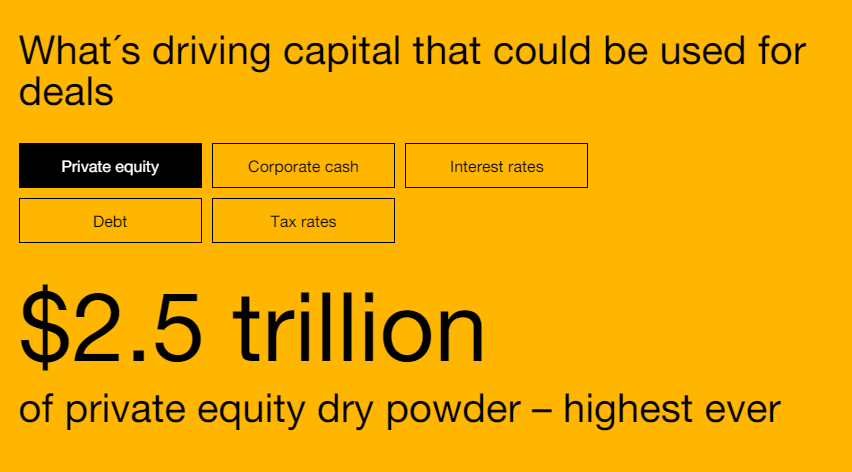
This PWC article link and the slides below show the power of the current financial and debt markets driving buyer/investor M&A appetites. The amount of available capital in 2020 for mergers & acquisitions is unprecedented. This year the USA funding and stimulus spending amid the pandemic has been equally historic. While the results of the election may be uncertain, experts agree that there will be tax increases in the years ahead… no matter who wins the election. Future tax impacts could be egregious for capital gains and estate taxes as well. A similar uncertainty exists with interest rates which already are at historically low levels. With all of these factors, it is easy to understand how the M&A markets are being propelled and buyer/investor interests are growing.
For healthcare business owners, the growth and consolidation which has been increasing over the past few years, is accelerating. Corporate buyers and strategic private equity continue to seek strong, growing healthcare businesses and their appetites are increasing. It should also be noted that the buyer profiles have also changed with cross-modality and deep reaching synergies also driving opportunities.
As strategic market advisors for healthcare business owners, Paragon Ventures believes now is not just the best time but an essential time to consider the strategic options for your business. Across almost every healthcare sector, the M&A activity is driving consolidation. Read this as opportunity with strong valuations and strategic options for the business stakeholders. If you are considering a sale, merger or recapitalization in the next few years, NOW is the time for you to consider if the strategic options are aligned with your personal goals for your business.
Paragon Ventures LLC – Healthcare Mergers and Strategic Acquisitions can provide insight into the current market valuation of your business and the M&A market opportunities for your consideration. Contact us here to schedule a complementary discussion of what all this means for you and your Company. All discussions are held strictly confidential.

What is driving capital for M&A?
 Consistent with conventional wisdom, recent PWC analysis shows that transaction multiples have historically fallen with the economy, resulting in lower valuations. The pool of acquisition targets should swell as it typically does in a recession, with pieces of companies or entire organizations adding to the M&A supply.
But they found that ability to buy – a key part of demand for M&A – will be stronger than in past downturns, thanks to both the level and mix of capital. Theoretically, this would imply that valuations might stabilize rather than dip during a downturn. Critically, however, not all potential acquirers will be in the same position. An economic downturn tends to impact marginal players – those that haven’t taken action to realign their business, shore up their balance sheet and address other key areas – and turn them from prospective buyers to potential sellers.
Conventional wisdom holds that mergers, acquisitions and other deal activity likely will plummet in an economic downturn, especially after record highs in M&A volume and a wave of stratospheric transaction values in recent years. Concerns of a steep drop-off are understandable. That’s what happened in the Great Recession, and the dot-com bust before that.

However, according to PwC, the expectations of M&A’s demise may be exaggerated. While deal volume has declined recently, fears of a full collapse similar to previous cycles may be premature. Well prepared corporate and private investors don’t have to fully retreat in this downturn. As PWC research shows, organizations that make deals in a recession actually could outperform their industry peers.
An Eye on Valuations
Many healthcare industry experts and professionals anticipate that many of the economic efficiencies such as waivers issued by the Centers for Medicare and Medicaid Services (CMS) will remain after the pandemic has lifted. The expansion of telehealth services and other technologies refined by and implemented during the pandemic are also predicted to continue to drive value long after a vaccine has been developed.
Healthcare services are a necessity (or perhaps unalienable right of Life, Liberty and the pursuit of Happiness) and the increasing demands of a larger and aging population will continue. Further, the focus on quality with decreasing costs will remain as the healthcare industry continues its shift from volume to value. 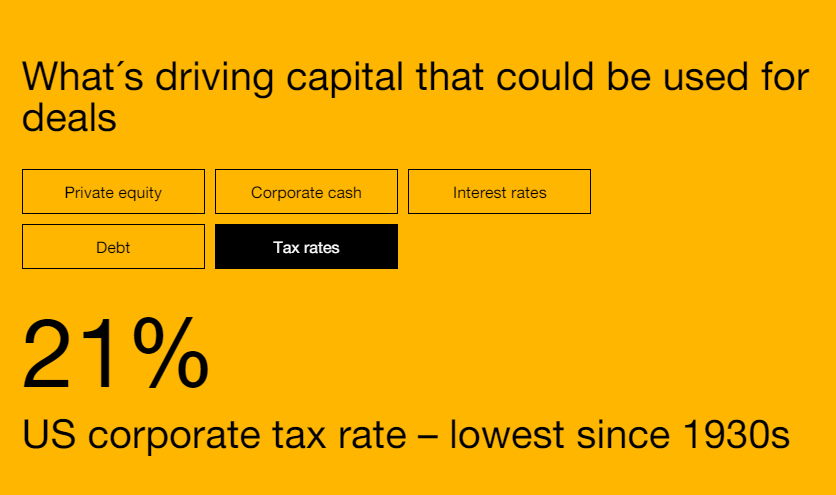
While the traditional metrics of valuation continue, with fewer available opportunities on the market, the buyer competition has increased for prized assets – well established, growing and profitable businesses. In some healthcare sectors, ranging from autism to home health and hospice, the breadth of buyers has also increased. The very base of vertical integrations has widened over the past few years.
Consolidation of healthcare services will also continue to improve outcomes and economic performance will be enhanced as we shift patient volumes to less costly care sites, and leverage technology across the continuum of care.
Exploring Strategic Options
There are many options to consider as the ultimate goal for the many years of hard work building and growing your company. For mature and profitable healthcare businesses today there are many strategic options to consider. These options include acquisitions, merger, divestiture, and recapitalization. Each of these options requires careful consideration to determine what is the best fit for the stakeholder’s goals for the business.
Should you consider a buyer or an investor? If your goal is to sell and ride off into the sunset, then your focus should be on a divestiture. If your interest is in taking chips off the table while continuing to grow the business over the next three to five years, then a recapitalization may be the best path for you. Each option has differing effects on valuation, the process and the pathway to a successful closing.
Exit strategy planning is one of the most overlooked – and most important aspects – of a business owner’s dream. You would not read all but the last chapter of a book… nor should you ignore the final chapter in your business ownership. Contact us today to discuss your strategic options.
Click here for more information on When Is The Right Time To Sell: https://www.paragonventures.com/wp-content/uploads/2017/08/Paragon-Time-To-Sell-PPT-2017.pdf
Paragon Ventures LLC
www.paragonventures.com
800-719-1555